
Opioid settlement funds allocated to Yampah Mountain High School
C.A.R.E. receives $200,000 grant for services in Garfield County
PRESS RELEASE
February 23, 2026
Garfield County is allocating $25,000 in opioid settlement funds to Yampah Mountain High School to support a drug and alcohol intervention counselor for the 2026–’27 school year.
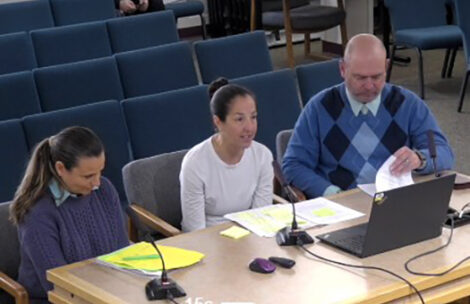
Colorado River Board of Cooperative Educational Services (BOCES) Special Programs and Grants Coordinator Nicolette DiPietro told the Board of County Commissioners that the position, which already exists at Yampah, has been funded in part by a Colorado Department of Education (CDE) grant that sunsets this year.
“We knew that we needed to look for other funding opportunities for that portion (that is sunsetting),” she said. “Overall, it’s a $120,000 contracted position with the (Aspen) Hope Center.”
Yampah Mountain High School Interim Principal Zoe Stern told the board that the drug and alcohol intervention counselor helps staff identify where students need support and how they can best help them.
“I can wholeheartedly say that it’s one of the most important positions in our building,” she said. “We rely on this position through the strategic intervention process. This counselor supports us and teaches us how to track the behaviors, such as a lack of student engagement and attendance concerns. … We really look into our students with high trauma, anxiety, depression, and suicidal ideations. Her caseload is currently 60 students out of 171.
“We prioritize mental health and we really look at individualizing; we do home visits, we set up intervention contracts and behavioral supports and outlets, and regrouping strategies, all of which come from this intervention counselor,” Stern added.
The opioid settlement funds may only be allocated toward approved purposes, including abatement strategies of “prevention, treatment, and harm reduction,” according to a state memorandum of understanding. The State of Colorado is receiving nearly $800 million in funding as the result of litigation with opioid manufacturers and distributors.
The settlement funding is being distributed in qualifying percentages, including 10 percent to the state; 60 percent to regions; 20 percent to participating local governments; and 10 percent for abatement infrastructure projects. Garfield is part of region 5, which includes Eagle, Lake, Pitkin, and Summit counties.
“These speedbumps and hiccups, we help our students to get through them,” Stein said. “We support our students and say, ‘let’s find our resilience, implement these interventions, and make you better and stronger at the end of the day.’”
Garfield County received $137,000 in opioid settlement funding in 2025. The funds come in incrementally over the year, as opposed to a lump sum due to ongoing settlement agreements.
“I’m very focused on suicide prevention,” said Commissioner Tom Jankovsky. “We recently approved $100,000 for YouthZone for its intervention counseling, and I know we have funds available in reserve. The Region 5 Opioid Abatement Council is focused on prevention work, and this is more intervention, but if we can save one individual, it’s money well spent.”
The board approved the $25,000 grant from opioid settlement funds unanimously, 3-0.
Board grants $200,000 to C.A.R.E.
The board also approved a $200,000 nonprofit grant for Colorado Animal Rescue (C.A.R.E.) to support its services in housing stray and owner-surrendered pets in Garfield County. The nonprofit provides 24-hour building access to all law enforcement agencies that may need to shelter an animal.
C.A.R.E. Executive Director Wes Boyd told the board that the nonprofit is celebrating 26 years of service to Garfield County and recently again passed its annual Pet Animal Care and Facilities Act (PACFA) inspection that assesses cleanliness, recordkeeping, and disease prevention.
“I want to start with a huge thank you for maintaining funding for the animal shelters in your budget,” he said. “I’m really proud that our county is doing this. We have two high-functioning animal shelters in Garfield County that both serve as role models across western Colorado. Thank you so much for finding that funding for us.”
According to its presentation, the C.A.R.E. facility, located in Spring Valley near Glenwood Springs, provides housing for as many as 40 dogs, 50 cats, and other pets, such as snakes, rabbits, and pigs. The shelter offers a pet food pantry, free microchipping for strays, discounted vaccines, medical and behavioral support, and more.
Boyd added that C.A.R.E. now has a disaster and emergency trailer onsite through a partnership with Colorado Veterinary Medical Reserve Corps.
“We have about 50 collapsible dog crates in the trailer, along with immediate supplies like water and food,” he said. “Also blankets and things we can just grab and go if there’s an evacuation somewhere in the county.”
In 2025, C.A.R.E housed 760 animals, including 209 strays and 290 pets that owners had to surrender; administered 1,244 vaccines; reunited 125 pets with their owners; adopted out 621 animals into new homes; and performed 339 spay/neuter procedures, including 34 via voucher ($50 procedure cost, which increased to $75 in 2026).
“We went years without having any litters born at the shelter and this past year we had two or three,” Boyd said. “We had one litter born in our front office by a dog that was dropped off just moments before she started labor. We had quite the family going at C.A.R.E. this year.”
In addition to its regular shelter services, C.A.R.E.’s pet food pantry, which partners with Meals on Wheels and LIFT-UP, distributed a total of 11,553 pounds of dry food and 2,264 cans of wet food to clients in 2025. The community contributed 3,909 volunteer hours at the shelter last year, performed more than 300 hours of community service, and more than 20 school groups visited C.A.R.E. on educational field trips.
The grant, which was previously budgeted for, was approved unanimously, 3-0, from the county’s nonprofit general fund.