
State methane rule could be costly for county landfill
Regulation requires expensive monitoring, $2 million for system installation
PRESS RELEASE
February 11, 2026
A new air quality standard adopted by the Colorado Air Quality Control Commission in December requiring the state to reduce greenhouse gas emissions by 50 percent by 2030, may force solid waste municipal landfills to implement costly monitoring infrastructure. The State of Colorado has created a roadmap to reach 100 percent net-zero greenhouse gas emissions by 2050.
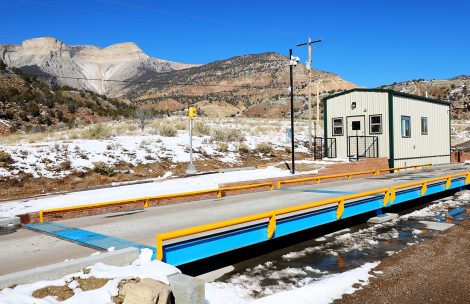
The regulation (Colorado Air Quality Regulation Number 31) is part of the larger Climate Action Plan to Reduce Pollution (HB 19-1261) that requires landfills to monitor greenhouse gasses, which could cost Garfield County as much as $100,000 annually, and potentially install a greenhouse gas control system. Initial estimated costs of such a system are roughly $2 million for the Garfield County Landfill near Rifle. The regulations are slated to go into effect this spring.
Coalition formed to address concerns
Public stakeholder meetings took place throughout the roadmap process, from which a coalition of 15 public landfills was formed to address concerns and objections over the new regulations. The alliance worked together to create a unified voice and hired an attorney to ensure their concerns were heard.
Consultant and former Garfield County Deputy Manager Bentley Henderson told the board that the onerous regulations on public landfills were akin to “using a sledgehammer to kill a fly.”
He explained that while some entities in Colorado are in favor of the regulations, there was “significant opposition” from public (and some private) landfill operators.
“This coalition was formed and a number of counties joined in, and we started meeting regularly to form our position,” he said. “That position was communicated to the APCD staff through a law firm that we hired, then public opinion was taken, and Commissioner Perry Will took the opportunity to speak on behalf of the coalition at one of the hearings and he was very effective.”
After hearing from the coalition, the Air Pollution Control Division (APCD) submitted three initial draft errata before settling on a final fourth version that made concessions for some of the landfills’ concerns.
Changes between the original draft regulation and the final approved legislation include shifting the methane violation standard from 200 parts per million (ppm) to the current Environmental Protection Agency (EPA) standard of 500 ppm; a three-year grace period for public landfills to budget and plan for the regulation; and removing a “one and done” rule that stated if a landfill exceeded its methane limit even one time the greenhouse gas control system would need to be installed.
“We now have two tries to correct the problem before we’d have to install the greenhouse gas control system,” Garfield County Landfill Manager Deb Fiscus told the Board of County Commissioners. “Also, if we fail the surface emissions monitoring (SEM) tests, we can opt for a tier 2 evaluation, the goal being that if our methane-generation rates are less than 30 percent, we don’t have to install the system.”
She stressed that the regulations are going to impact the landfill’s budget going forward and that costs will likely be increasing.
The Garfield County Landfill is an enterprise fund and is not supported by taxpayer dollars. The regulation, which is an unfunded mandate from the state upon local governments, would force the landfill to adjust tipping fees, resulting in not only higher costs at the dump, but also a potential increase in the cost of services from garbage haulers who deposit waste at the landfill.
“Landfills that are small and challenged on their budgetary constraints could be forced to close down,” Henderson said. “I think the Air Pollution Control Commission (APCC), which gave final approval to the regulation, heard these issues and was sympathetic to the challenges and tabled their decision at that time to look at how to mitigate some of the broader impacts, which led to the errata.”
He added that with an increased cost for waste disposal, the likelihood of illegal dumping would also increase.
Greenhouse gas sources
Henderson added that the legislation spawned a number of regulations, giving form to the state’s first greenhouse gas pollution reduction roadmap.
Greenhouse gas emission sources have been identified by Colorado Department of Public Health and Environment (CDPHE) as originating from the energy sector (83.6 percent), agriculture (11.4 percent), Industrial Processes and Product Use (IPPU) (3.3 percent), and landfills (1.1 percent). Overall, 1.35 million metric tons (MMT) of greenhouse gases are produced in Colorado each year.
“That was the inception of the effort to begin all these air quality control measures, of which Regulation 31 is part of,” he told the board. “This was initiated between 2019 and 2021, and CDPHE staff began looking at areas where regulations could be enacted to mitigate greenhouse gas pollution. One of them was methane regulation across a number of sectors, including energy, livestock, and landfills.”
County conducted unofficial testing
The county conducted unofficial methane-generation monitoring in November 2025 and found an average methane-generation rate of 35.7 percent at vents, but instantaneous testing registered methane levels at 180 ppm, which is well under the limit. Official quarterly SEM monitoring will occur at the landfill beginning in 2029.
“That puts us into a position of having to pass our quarterly SEMs,” Fiscus said. “Moving forward, we are going to have to cap those vents off. Once those are capped, the SEM readings could change.”
“This is more about containment rather than figuring out an alternative to collection,” Henderson added. “One of the things that has been granted through this process is that landfills are afforded the ability to use additional cover or types of cover to help mitigate the escape of these gasses.”
“Your regular municipal solid waste that we all throw into our trash cans typically holds about 25 percent water,” Fiscus said. “Water in conjunction with decomposition is what generates methane, so the more water, the more methane.”
Garfield County Oil and Gas Liaison Kirby Wynn suggested looking into legislative options to mitigate the regulatory and fiscal impacts on counties and municipalities.
“With a new governor and administration coming in, there’s an opportunity to try and lobby through the Legislature and state government as it changes,” he said. “We’ve heard that there is some bipartisan understanding that the rules they came up with are so infeasible and so fiscally punitive that it’s going to push some very much needed rural landfills out of business.”
“We need to come back with a gameplan that is as fiscally reasonable as possible,” said Commissioner Tom Jankovsky.