

Garfield County backs DOE effort seeking nuclear lifecycle campus locations
County renews membership in the Western States and Tribal Nations Energy Initiative
PRESS RELEASE
March 5, 2026
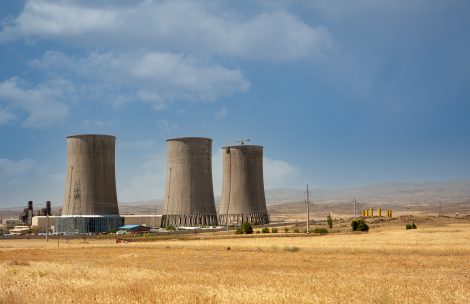
Garfield County is supporting a U.S. Department of Energy (DOE) process looking into the potential of nuclear energy generation in the region. The DOE has issued a request for information (RFI) to help identify potential locations to construct a nuclear lifecycle campus.
The DOE is in the process of determining areas throughout the United States that are capable of supporting such a campus, which could include reactor development, manufacturing, workforce training, energy grid integration, and more.
Matt Solomon, project manager for the Northwest Colorado Energy Initiative, told the Board of County Commissioners that all branches of the DOE are under one vision to build full lifecycle mapping for a U.S. nuclear energy system. He added that the DOE is determining whether or not Colorado is ready to participate in a discussion that will shape the future of nuclear energy.
“I attended a meeting in Oak Ridge, TN, and they said states that don’t participate ‘lose their seat at the table,’” he told the board.
Signing onto the RFI does not commit Garfield County to allow nuclear energy development in the region but helps give Colorado a voice as the DOE determines areas that can support a long-term energy system.
Solomon said that the National Laboratory of the Rockies (NLR) is finalizing a report with the National Centers for Environmental Information (NCEI) that assesses solar, wind, and geothermal energy in northwest Colorado. This report is helping to create a full model of regional energy opportunities to support the state’s Assess Advanced Energy Solutions in Rural Colorado feasibility study.
“That final report should be approved by the DOE,” he said. “It’s mainly looking at the Hayden and Craig power plants. Thanks to Congressman Jeff Hurd, NLR was able to fast track this for approval with the DOE. It’s been a real team effort to get this done.”
Solomon, who is also chairman of the Club 20 Research and Education Foundation, added that Club 20 is partnering with Purdue University and data firm KeyLogic, to create an energy impact analysis for the region.
“We are putting all energies on the same scales over a 60-year time period,” he explained. “So, if 60 years is one lifecycle for nuclear, it’s potentially four to five for solar and so many for wind, and we want to look at the environmental impacts and the cost per kilowatt for each of those over that period of time. … It’s for long-term visioning and coming up with an objective way for defining ‘best of the above’ for each community in the country.”
Solomon added that he’s working with Atmos Energy and Idaho National Laboratory to make a presentation on the integration of nuclear and natural gas at the upcoming Energy & Environment Symposium, which takes place April 14-26, 2026, in New Castle, Colorado.
“The stars are aligning; Club 20 last year passed a resolution supporting the full lifecycle of nuclear energy,” he said. “So, with Garfield County being one of 22 counties in Club 20, that’s on the books in Colorado a year ahead of this RFI.”
“We, in partnering with Western States and Tribal Nations and being part of the four supporting counties in western Colorado, have carried the water with this,” said Commissioner Mike Samson. “Is the state of Colorado going to get on board or are we going to be doing this by ourselves again? Is Gov. Polis with the governors of Idaho, Wyoming, Utah, and New Mexico?”
“I think we’re halfway between, commissioner,” Solomon replied. “We have for the first time, with the bipartisan nuclear caucus, as well as leadership from the state senate and the Colorado House of Representatives, signed a letter to the governor asking him to sign on to this. … I’m 80-20 that the governor will sign on to this.”
“If we could get Sens. (Michael) Bennet and (John) Hickenlooper on board it would have a tremendous amount of weight,” Samson added.
The board approved submitting a letter supporting the RFI unanimously, 3-0.
Rockies clean natural gas an ‘important asset’
Garfield County reaffirmed its support for the Western States and Tribal Nations (WSTN) Energy Initiative, renewing its membership in the public-private partnership that promotes natural gas in the west.
The WSTN Energy Initiative seeks to build collaborations to “advocate for the growth of Rockies natural gas markets, driving rural economic development, empowering tribal self-determination, and supporting global emission reduction through clean energy exports.”
Formed by a memorandum of understanding, the energy partners include the U.S. states of Utah, Wyoming, and New Mexico; the Ute Indian Tribe; Garfield, Mesa, Moffat, and Rio Blanco counties in western Colorado; and Baja California, Mexico, along with industry stakeholders.
Andrew Browning, president of the WSTN Natural Gas Initiative, told the Board of County Commissioners that it has been a very active year for the collaboration, and that a comprehensive natural gas infrastructure roadmap has been created for the Rocky Mountain Basin.
“I want to thank Garfield County for its continued support for our campaign to develop markets for natural gas for the western states,” he said. “This roadmap was released in October of 2025 at an energy conference by New Mexico Governor Michelle Lujan Grisham (D) and Wyoming Governor Mark Gordon (R), who were hosting the Japanese ambassador. This was a follow-up to their joint, bipartisan trade mission to Japan, and the study was funded publicly by the states of Wyoming, Utah, New Mexico, and the western Colorado counties, as well as the Jicarilla Apache Nation and the Southern Ute Indian Tribe.”
He told the commissioners that new natural gas plants have been announced in Arizona (Maricopa and Yuma counties), and that the Pacific Northwest is facing natural gas shortages in the next five years (nine-gigawatt deficit in power generation by 2030).
“There are a number of proposed infrastructure projects that we’re going to be partnering with these companies on in helping to lower the political risk of getting these pipes built from our basins to satisfy both domestic and international need,” Browning said. “The roadmap was pivotal in laying out the gameplan, bringing attention to our basins, proving that we have 270 trillion cubic feet of recoverable natural gas reserves, and that we’re cost-competitive with other basins.”
Browning added that while the Pacific Northwest needs fuels for energy, stakeholders he’s spoken with there are not going to forfeit their climate goals. Over and above domestic use, Asian countries also import liquid natural gas (LNG) from North America to meet energy needs.
“Producers in the Rockies in Colorado, New Mexico, and Wyoming are producing some of the cleanest molecules in the world,” he said. “Because of the progress made from our upstream and midstream methane reductions, we’ve got a fantastic story to tell: We’ve got cleaner gas than in other basins and it’s important to consumers on the West Coast, as well as to Asian consumers. The Japanese still have significant climate goals that they’re not going to ignore, same with the South Koreans, and that’s the price of admission going forward. … Our lower-emissions profile will remain an important asset.”
The WSTN membership renewal contribution was increased by the board from $5,000 to $10,000, and approved unanimously, 3-0, out of the BOCC’s discretionary fund.